Traffic light food labelling: is it mandatory in the UK?
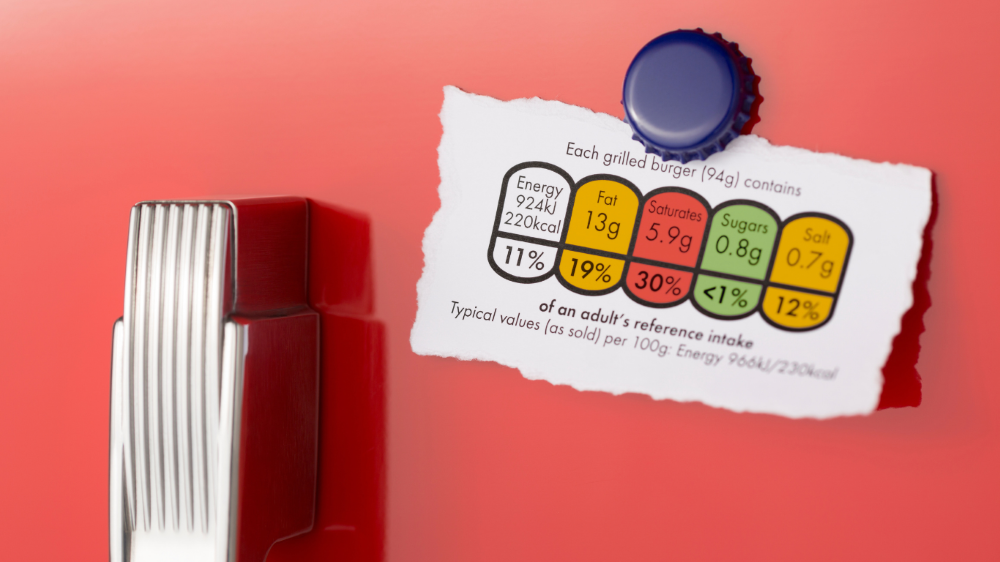
Pick up a frozen pizza in a UK supermarket and you might find red, amber and green on the front of the box, or nothing at all. In January 2026 Which? looked at popular frozen pizzas and found that Crosta Mollica, Pizza Express and Italpizza carried no front-of-pack nutrition label, while other brands did. Iceland doesn't use the colour coding on its own-brand products either.
That's allowed, because traffic light food labelling is still voluntary. But MPs on the Health and Social Care Committee want it made mandatory by January 2028, so it's worth knowing where things stand before your next packaging run.
Short answer: traffic light food labelling is not mandatory in the UK as of November 2026. Traffic lights have been recommended since 2006, and the current label format since 2013, but using them has always been voluntary. If you do use it, it has to follow the rules in UK food law and the 2016 front-of-pack guidance from the Department of Health and the Food Standards Agency (FSA).
How the food traffic light system works
The food traffic light system gives four nutrients a colour: fat, saturates, sugars and salt. Green is low, amber is medium and red is high. Most labels also show energy in kJ and kcal, and the percentage of an adult's reference intake (%RI) each nutrient provides.
The colours come from fixed cut-offs per 100g for food and per 100ml for drinks, set out in the government's front-of-pack labelling guidance.
| Food: green | Food: red | Drinks: green | Drinks: red | |
|---|---|---|---|---|
| Fat | 3g or less | Over 17.5g | 1.5g or less | Over 8.75g |
| Saturates | 1.5g or less | Over 5g | 0.75g or less | Over 2.5g |
| Sugars | 5g or less | Over 22.5g | 2.5g or less | Over 11.25g |
| Salt | 0.3g or less | Over 1.5g | 0.3g or less | Over 0.75g |
Anything between green and red is amber. Drinks get tighter limits than food, so a juice drink can go red on sugar at half the level a cereal bar can.
There's also a portion rule that catches people out. For a food sold in portions over 100g, a nutrient turns red if one portion gives more than 30% of the reference intake (21g fat, 6g saturates, 27g sugars or 1.8g salt), even when the per 100g figure is amber. For drinks the rule kicks in at portions over 150ml. So a 350g ready meal can be amber on salt per 100g and still show red on the front.
The rules for using traffic light labels on pack
Voluntary doesn't mean anything goes. Front-of-pack nutrition information is covered by Article 30(3) of retained Regulation (EU) No 1169/2011, the food information rules. You can repeat energy on its own, or energy plus fat, saturates, sugars and salt. You can't choose to show salt and sugars but quietly leave off fat because it's red.
The colour coding itself counts as an "additional form of expression" under Article 35, which is why the government guidance exists. In practice that means:
- Use the government's thresholds, not your own.
- Keep the front of pack consistent with the nutrition declaration on the back (our UK food labelling regulations checklist covers what that panel must show). If your back-of-pack sugar changes after a reformulation, the traffic light on the food label may have to change too.
- If you show %RI, add the line "Reference intake of an average adult (8400kJ/2000kcal)".
Most of the traffic light work happens in the numbers rather than the design. Every recipe change that moves sugar or salt by a gram or two can move a colour, and it's easy to reformulate, update the back of pack and forget the front.
This is the part Canoli handles for you. It works out your traffic lights straight from the recipe, next to your back-of-pack nutrition panel, and updates both every time the recipe changes, so the front and back of pack never drift apart.
Will traffic light labels become mandatory?
Possibly. Here's where it stands as of November 2026.
What's confirmed. The scheme is voluntary across the UK. The government consulted on front-of-pack labelling in 2020 ("Front-of-pack nutrition labelling in the UK: building on success") and, according to IGD, still hasn't published a response.
What's been recommended. On 15 July 2026 the Health and Social Care Committee published Food and Weight Management: Fixing the food environment. In paragraph 68, it says the government should introduce mandatory front-of-pack labelling by January 2028, using the existing traffic light label as the template because shoppers know it and manufacturers already use it. The report also cites Nesta's 2024 estimate that mandatory front-of-pack labelling would cut adult obesity in the UK by about 7%. In the next paragraph, it asks the government to look at Nutri-Score and Chile's "high in" warning labels for the longer term, so the traffic light label itself may not be the final design. Which? made the same call in January 2026, and the Obesity Health Alliance backed mandatory colour-coded labels when the committee reported. The report covers England, because health policy is devolved.
What's still unclear. The government hasn't committed to a date. Its line in January 2026 was that it's bringing in a modernised nutrient scoring system to reduce obesity, which is a different policy. The UK-EU sanitary and phytosanitary (SPS) agreement adds another question. The government's own guidance says food labelling requirements are among the rules Great Britain will apply in line with the EU, and the EU has never made front-of-pack labels mandatory. Which? has raised how the agreement could affect the UK's room to regulate food labelling, and we covered the bigger picture in our post on UK-EU SPS dynamic alignment.
So a January 2028 deadline is a recommendation, not a law. But the direction is clear enough, and a brand designing packaging now will probably still be selling it in 2028.
Front-of-pack rules in the UK and EU keep moving like this. The Bite is our free newsletter that sends the changes that matter for food brands every two weeks.
Traffic lights, HFSS and Nutri-Score are three different things
Teams mix these up all the time, and they can give a product three different verdicts.
Traffic lights rate four nutrients one at a time, against fixed cut-offs. HFSS (high in fat, salt or sugar) status comes from the nutrient profiling model, which scores the whole product and gives credit for things like fibre, protein and fruit and vegetable content. Our guide on how to check if a product is HFSS walks through it. Nutri-Score is the A to E grade used in France, Germany and other EU countries, and it uses yet another algorithm, which is why products have been dropping grades in 2026.
A granola can show amber on sugar, pass as non-HFSS and still get a C on Nutri-Score. If you sell in the UK and the EU, you may need all three worked out from the same recipe.
What this means for a food team
If you already use traffic lights, nothing changes today. The useful job is checking your current range against the portion rule and against your latest recipes, because that's where front-of-pack and back-of-pack quietly drift apart.
If you don't use them, you're in the same position as Iceland's own label and several big pizza brands, which is legal. But retail buyers often expect traffic lights anyway, and if the committee's recommendation goes ahead, you'd have until January 2028 at the latest. That's tight. The Food and Drink Federation (FDF) told the committee that businesses "generally need about two years to run a label change" so they don't end up throwing packaging away, and January 2028 is a little over two years from now.
Either way, it's worth knowing how many reds your range would carry before a buyer or a regulator asks you. A red on sugar or salt is often a gram or two away from amber, and that's a reformulation brief, not a design one.
With Canoli, you can see the traffic lights for every recipe in your range in one place, and try a recipe change to see whether a red drops to amber before anything goes to print. The traffic light label is included in your label export, ready for your designer.
Want UK and EU regulatory and compliance updates for food brands in five minutes, every two weeks? Sign up to The Bite.
Frequently asked questions
Are traffic light labels mandatory in the UK?
No. As of November 2026, traffic light food labelling is voluntary across the UK. The Health and Social Care Committee recommended in July 2026 that it become mandatory by January 2028, but the government hasn't committed to that.
How does the traffic light system work on food?
It's a front-of-pack label that colours fat, saturates, sugars and salt green (low), amber (medium) or red (high), based on the amount per 100g or 100ml. It usually also shows energy and the percentage of an adult's reference intake.
What are the traffic light thresholds for food?
For food per 100g, red means over 17.5g fat, over 5g saturates, over 22.5g sugars or over 1.5g salt. Green means 3g fat or less, 1.5g saturates or less, 5g sugars or less, or 0.3g salt or less. Drinks have lower limits per 100ml.
Can a product be amber per 100g but red on the label?
Yes. For foods sold in portions over 100g, and drinks in portions over 150ml, a nutrient shows red if one portion gives more than 30% (food) or 15% (drinks) of an adult's reference intake, whatever the per 100g figure says.
Can I show only some of the traffic lights?
No. If you repeat nutrition information on the front of pack, UK food law lets you show energy alone, or energy plus all four of fat, saturates, sugars and salt. You can't leave one out because it's red.
Is a red traffic light the same as HFSS?
No. Traffic lights rate each nutrient separately. HFSS status comes from the nutrient profiling model, which scores the whole product. A product can have a red light and not be HFSS, or have no reds and still be HFSS.
Does the EU use traffic light labels?
Not as an EU-wide scheme. Front-of-pack labels are voluntary in the EU, and several countries, including France and Germany, use Nutri-Score instead.
Traffic light labels have been voluntary for more than a decade, and they may not stay that way. If 2028 does become the deadline, the brands that already know their reds won't be redesigning packs in a hurry.
Try Canoli free and see your traffic lights for every recipe.