What counts as high protein? UK label rules for snacks
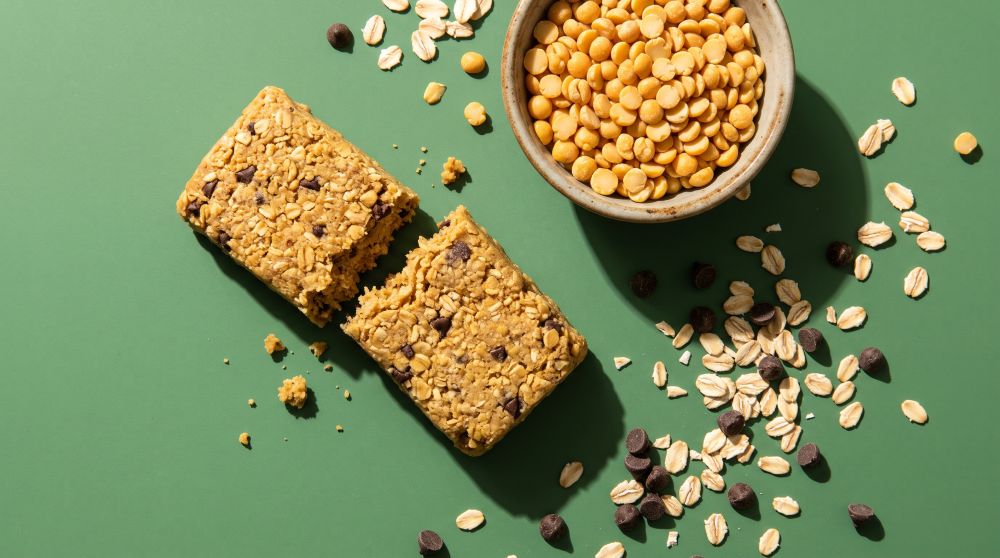
Ferrero, the company behind Nutella and Rocher, now owns protein brands from Power Crunch in the US to Fulfil here in the UK. Emsland Group has just shown a baked potato chip with almost three times the protein of the original, using a yellow pea flake. Next week at Food Ingredients Europe in Frankfurt (17 to 19 November), Lantmännen will show NordPea, a Swedish pea protein isolate it developed with Ingredion. If you make high protein snacks in the UK, or want to, you've probably had a "can we make this high protein?" brief land on your desk this year.
The catch is that "high protein" on a pack is a legal claim with a number behind it, and that number isn't grams.
Short answer: ****in the UK ****and the EU, a food can only be called "high protein" if at least 20% of its energy comes from protein. "Source of protein" needs at least 12%. Both thresholds come from the Annex to Regulation (EC) No 1924/2006 on nutrition and health claims, which the UK kept after Brexit, and they apply to drinks as well as food.
Northern Ireland follows the EU version directly under the Windsor Framework, so one calculation works across the UK and EU. Here's how to run it on a snack, and the places where brands usually get it wrong, as of November 2026.
Why the high protein threshold is a percentage, not grams
Most people expect a rule like "20g of protein per 100g". The regulation works on energy instead. Every gram of protein counts as 4 kcal on a UK label (that conversion factor is fixed in Annex XIV of Regulation 1169/2011, which we cover in our UK food labelling regulations checklist), so the test looks like this:
Protein (g per 100g) × 4 ÷ energy (kcal per 100g) × 100 = % of energy from protein
If that comes out at 20 or more, you can say "high protein". At 12 or more, you can say "source of protein".
This means the amount of protein you need depends on how many calories the product has. Here's what that looks like for a few typical snacks:
| Product (per 100g or 100ml) | Energy | Protein needed for "source of protein" | Protein needed for "high protein" |
|---|---|---|---|
| Lighter drink | 40 kcal | 1.2g | 2g |
| Low-fat yoghurt | 70 kcal | 2.1g | 3.5g |
| Cereal bar | 400 kcal | 12g | 20g |
| Granola | 450 kcal | 13.5g | 22.5g |
| Crisps or chips | 500 kcal | 15g | 25g |
(Energy figures are typical round numbers so the maths is easy to follow, not values from any particular product.)
Energy-dense snacks have the hardest job. A 500 kcal crisp needs 25g of protein per 100g to make the claim, while a light drink gets there with 2g. It also works the other way round. If you cut sugar or fat and the calories drop, protein's share of the energy goes up without you adding a single gram. Sometimes a reformulation qualifies for a claim it didn't plan for.
Source of protein or high protein: which one can your snack carry?
Take the Emsland trial as a thought experiment. Say a baked potato chip starts at about 6g of protein and 450 kcal per 100g. That's roughly 5% of its energy from protein, so no claim at all. Triple the protein to 18g, keep the calories about the same, and you're at about 16%. That's a "source of protein" chip, not a "high protein" one.
That gap catches a lot of teams. The protein jump is big and the marketing team is already excited, but the claim that's actually allowed is the smaller one. Food Manufacture made the same point about Ferrero in October: a hazelnut praline would struggle to reach the 20% threshold, so Rocher doesn't fit a high protein story, and the protein push runs through brands like Fulfil instead.
There's a third option too. "Increased protein" is allowed when the product has at least 30% more protein than a similar product and also meets the "source of protein" condition. It's useful for a reformulated version of an existing line, as long as you can show what you're comparing it with.
If you want to check where your own recipe lands, Canoli shows which nutrition claims a recipe qualifies for and updates them as you change ingredients.
Can you call it a protein bar if it doesn't meet the claim?
This is where the trend data gets interesting. UK searches for "more protein bar" are up 130% on last year, and "protein bar brands" are up 160%. Plenty of products now carry protein in the name itself.
The regulation covers that. Article 1(3) of 1924/2006 says a brand name or trade mark that could be read as a nutrition claim can only be used if it comes with a related claim that meets the rules. The Department of Health and Social Care (DHSC) guidance on the regulation adds that the rules control "anything that has the same meaning to the consumer as one of the claims listed in the Annex."
Trading standards guidance says the same thing. The Chartered Trading Standards Institute's Business Companion guide to nutrition and health claims says that when a fancy name, trade mark or brand name carries a nutrition claim, "an appropriate permitted nutrition claim must appear on the product", and the name also triggers a full nutrition declaration.
Neither guide names "protein bar" specifically. But a name built around protein suggests the product is a good source of it, so the safe reading is that a "protein bar", a "Protein+" range or a protein-led brand should meet at least the "source of protein" condition and say so on pack. If it doesn't, the name is the first thing a trading standards officer or a retailer's technical team will question.
Does adding protein help a product's HFSS score?
Sometimes, and less often than people hope.
The nutrient profiling model (NPM), which decides whether a product is HFSS (high in fat, salt or sugar), gives up to 5 points for protein, with the top score above 8.5g per 100g. Those points come off the product's "bad" score, so more protein should help.
There's a rule that stops that for a lot of snacks, though. Under the NPM 2018 technical guidance (republished in January 2026), if a food scores 11 or more "A" points, from energy, saturated fat, sugars and salt, it can't score any protein points unless it also gets the full 5 points for fruit, vegetables, nuts and seeds.
It shows up in the market too. When University of Glasgow researchers looked at 1,200 UK products carrying protein claims in 2021, a quarter of them still scored as "less healthy" under the nutrient profiling model (Proceedings of the Nutrition Society).
So for a chocolate-coated bar or a well-seasoned crisp that's already high on sugar, fat or salt, adding protein probably won't change its HFSS status at all. You'd have to bring the A points down first. We go through the scoring step by step in what is HFSS, and the January changes in our NPM 2018 update post. Or calculate your NPM score in Canoli and see whether the extra protein counts at all.
Pea protein isolate and what the claim doesn't check
We've used pea protein as the example because it's where much of the new protein supply for European snack makers is coming from right now: NordPea and KWS's pea protein isolates, and Emsland's pea flake, all launched or announced in the past few weeks. If your supplier hasn't offered you one yet, they probably will soon.
The claim counts total protein, not quality, so 20g of pea protein and 20g of whey count the same. Pea protein is low in methionine, one of the essential amino acids, which is why it's often blended with rice protein. "Complete protein" isn't on the permitted claims list, and trading standards guidance is clear that you "must not make any nutrition claim that does not appear on the list", so keep it off the pack.
Isolates are what most high protein snacks rely on to hit 20% (NordPea's production is expected to start in the first half of 2027). The catch is that isolated proteins are a NOVA marker, so a snack built on pea protein isolate is almost always ultra-processed under NOVA. That matters if a retailer's brief also asks for "simple ingredients".
What this means for a food team
If you're a founder-led brand, run the 20% sum before the pack design starts. It takes two numbers from your nutrition panel. If you land at 15%, decide early whether you'll reformulate to reach "high protein" or design the pack around "source of protein". Changing the claim after artwork is signed off is the expensive way round.
If you're a manufacturer or co-manufacturer, watch the claim every time the recipe moves. A cheaper protein crisp from a new supplier, a little more chocolate coating, or a change to bake loss can push a product from 21% to 19% without anyone noticing. A claim is only legal for the recipe you're actually selling.
If you're working on GLP-1 era products (the appetite-suppressing medicines that about 1.6 million people in the UK are using), you'll probably want "high protein" and "low calorie" on the same pack. Shoppers are looking for it: UK searches for "high protein low cal snacks" are up 40% this year. "Low energy" is a separate claim with a much tighter limit: 40 kcal per 100g for solids, or 20 kcal per 100ml for drinks. Very few snacks get there, so check both before you promise both. And once you make any nutrition claim, a full nutrition declaration on pack becomes mandatory.
With Canoli, you can build the recipe once and see the nutrition panel, the percentage of energy from protein and your NPM score straight away. You can swap in a different protein crisp or cut the coating and watch whether the product still qualifies for "high protein", and spot the moment a supplier change drops it to "source of protein" before the artwork goes to print.
Frequently asked questions
What does "high protein" mean on a UK food label?
It means at least 20% of the food's energy comes from protein. The rule is in the Annex to retained Regulation (EC) No 1924/2006, and it applies to both food and drink in Great Britain. Northern Ireland and the EU use the same rule, with the same threshold.
How much protein does a snack need to be called high protein?
It depends on the calories. Multiply grams of protein per 100g by 4, divide by kcal per 100g, and multiply by 100. The result needs to be 20 or more. A 400 kcal bar needs 20g of protein per 100g, and a 500 kcal crisp needs 25g.
What's the difference between "source of protein" and "high protein"?
"Source of protein" needs at least 12% of energy from protein, and "high protein" needs at least 20%. A product that meets 12% but not 20% can only use "source of protein" or wording that means the same thing.
Can I use "protein" in my product or brand name if it doesn't meet the claim?
Under Article 1(3) of Regulation 1924/2006, a brand name or trade mark that suggests a nutrition claim has to come with a permitted claim on pack. The guidance doesn't name "protein bar" specifically, but the safe reading is that a product named around protein should meet at least the "source of protein" condition and state it on pack.
Can drinks, milk or yoghurt be labelled high protein?
Yes. High protein drinks, milk and yoghurt follow the same 20% of energy rule as food. Because these products are usually lower in calories, they often need much less protein than a snack to qualify. A 40 kcal per 100ml drink needs 2g of protein per 100ml.
What is pea protein isolate, and does it make a snack high protein?
Pea protein isolate is a concentrated protein made from yellow peas, typically 80 to 85% protein (Roquette's Nutralys S85, for example, is sold as an 85% isolate). It's one of the most common ways to reach the 20% threshold in snacks, but whether a product qualifies depends on the whole recipe's calories, not just the isolate.
Can a snack be called high protein and low calorie at the same time?
Only if it meets both claims. "Low energy" needs 40 kcal or less per 100g for solids, or 20 kcal or less per 100ml for drinks. Most snacks are well above that, so "high protein" plus "low calorie" is realistic for drinks and some dairy, and rare for bars or crisps.
Does adding protein improve a product's HFSS score?
It can, but not always. The nutrient profiling model gives up to 5 points for protein. A food that scores 11 or more "A" points can't count those protein points unless it also scores 5 points for fruit, vegetables, nuts and seeds. For many indulgent snacks, cutting sugar, saturated fat or salt does more.
Protein is one of the clearest claims on a UK label because it comes down to one sum. The hard part is keeping that sum true as the recipe, the supplier and the bake change around it.
If you'd rather not redo that sum by hand every time something changes, Canoli keeps it up to date for you, from the first recipe draft to the final label. Start your free trial.